
On This Day 13th November
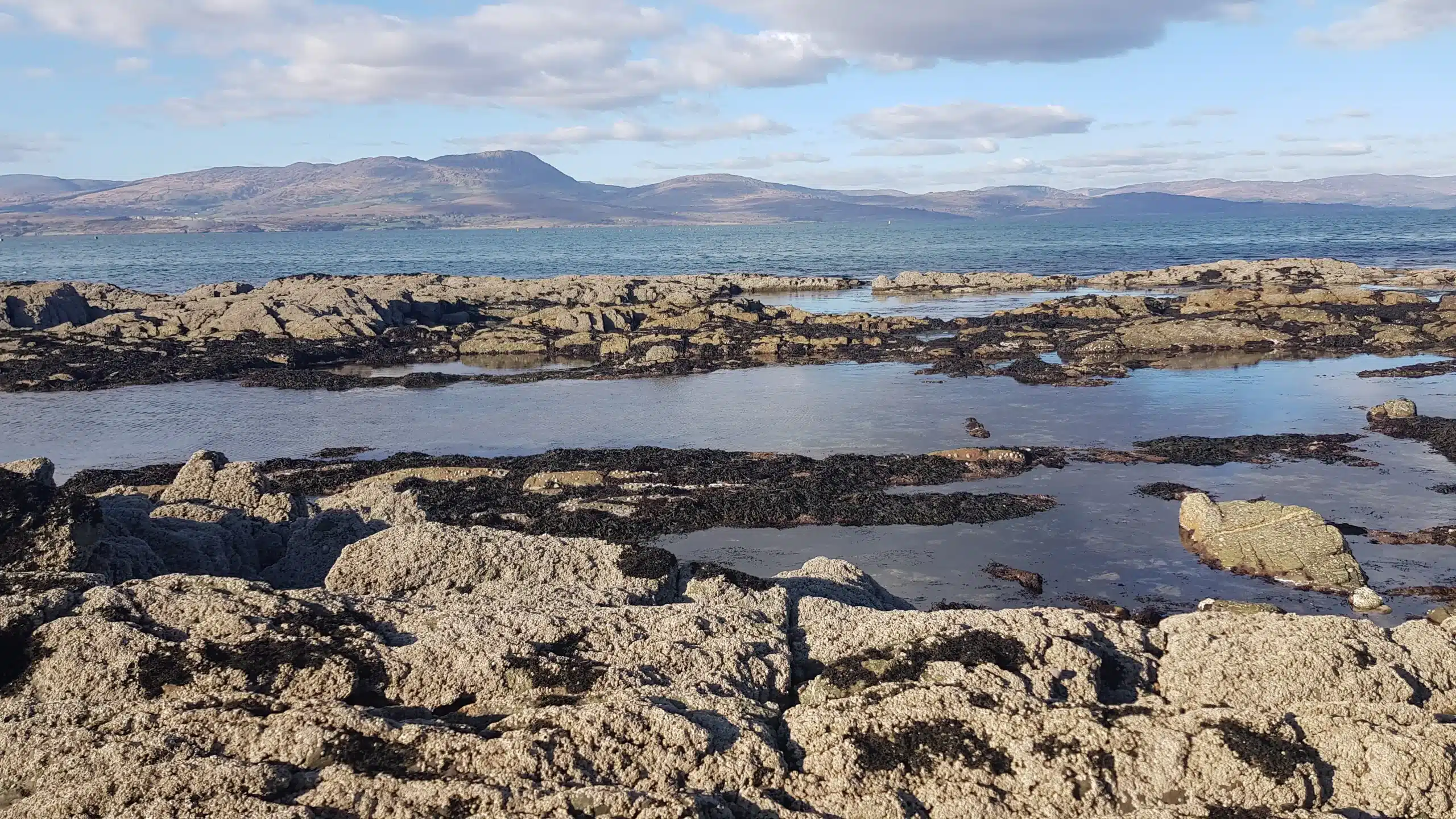
Ellen Hutchins wrote to Dawson Turner on 13th November 1813 – On This Day, 210 years ago. The full text of the short letter is HERE. The notes below fill in a bit of what had been happening in Ellen’s life since February that year, which was the last On This Day blog.
On 6th February 1813 Ellen managed to write a few lines to tell her great friend and fellow botanist, Dawson Turner, that she was “recovering after a very long and severe illness”. She also wrote “for some days I did not expect to recover.”
Ellen’s recovery was short lived, and she suffered long bouts of severe illness throughout 1813 in parallel with increased caring responsibilities for her mother whose health was also worsening. She did not give up her interest in botany, but had precious few times at which she could pursue it. Ellen’s continuing friendship and correspondence with Dawson Turner meant a huge amount to her during a difficult year. In one letter she wrote “You can hardly imagine how much pleasure you have given me & how often your kindness has revived me”.
On 10th April 1813 Ellen wrote:
“My mother is in a very melancholy state & requires constant attendance. She cannot bear anyone else to come near her or talk to her so that I have now very little leisure for any of my own gratifications. The care of her & of the house & a great variety of country affairs occupies me almost incessantly.”
Later in the letter she continues:
“My dear Sir my life has been & is likely to be a very uneasy & troubled state. I do not I will not suffer myself to repine. I only pray for patience & fortitude to support every suffering to which I am subject. I have troubled you too much with melancholy details. Let me turn to more pleasing subjects, let me tell you how when I sat to rest my weary frame on a bank of moss I started up with pleasure at sight of J [Jungermannia] viticulosa full of fructification & said to myself how glad Mr. T will be. I never felt more pleased than at finding it, so very interesting too & connecting it so very nearly with J trichomanis, the calyx is immersed in the earth in the same way as in that species. It is with us a very common plant. J Sphagni I found perfect this morning & send you some. I found J. Lyelli today very near me and full of calyces. I expect to get it in perfection plentifully, in about a fortnight. It is very common on many of our bogs. J laxifolia I will send in fructification.”
What is so very sad is that we can tell from her later letters that this was Ellen’s last botanical excursion. For the rest of 1813 and all of 1814, she was too ill to botanise.
Both Dawson Turner and Ellen attached great importance to their friendship, and Dawson Turner clearly valued Ellen highly as a botanist. On 11th May 1813 Dawson Turner wrote:
“And now, my dear Madam, let me finish as I began, by once more imploring you to take all possible care of a life & a state of health so valuable to all science & particularly to your friends & to me so invaluable. Every wish & every prayer for your health & your happiness daily attends on you from my dear Madam your affectionate friend, Dawson Turner”
Ellen and her mother went to stay in Bandon, as Ellen explained in a letter of 12th June:
“When your last letter reached Ballylickey I was not at home having been obliged to take a little journey to obtain medical advice for My Mother & my self. We have both been in a very bad state. She is very weak & has lately had some very alarming symptoms of loss of memory from which she has recovered & is just now in a better state than I could have expected, but she requires constant care & to be watched incessantly. I am rather better than before I left home, but I have lately become so nervous & tremble so I can hardly write. No person suffering under the various & complicated mental miseries that I have to distract me could be otherwise. My situation is one of uncommon misery. I look round me & see no person so surrounded with troubles, but why my dear Sir, should I trouble you with my sufferings when I cannot explain my story. I will only say that some disputes in my family have for years oppressed my spirits & broken my heart.”
Ellen’s cousin, Thomas Taylor, made the suggestion in a letter to Dawson Turner that Ellen’s eldest brother, Emanuel, had taken possession of the house at Ballylickey and had evicted Ellen and her mother. We don’t know if this account is true.
We know that Ellen’s father had died in 1787 without leaving a will and that the major disputes over the inheritance of property and money were between the eldest brother, Emanuel, and the second brother, Arthur, and also between Emanuel and his mother. Some Hutchins family documents were found earlier in 2023, including a copy of the marriage settlement between Ellen’s father and mother and a separate note about significant debts that needed paying which may help explain the situation.
Ellen and Dawson Turner corresponded for seven years but never met each other. More than once during 1813 in letters he repeated his invitation to Ellen to come and live with his family in Yarmouth for an extended time to recover from her illness. He had made a respectable social connection between his family and Ellen by naming one of his daughters after Ellen and asking her to be the child’s godmother.
On 11th May 1813, he wrote:
“Your little Godchild gets on nicely & begins to talk with considerable facility. How I wish you could come & see her! Should death unfortunately deprive you of that parent who has so long entirely occupied your time & thoughts, to the material injury, I fear, of your own health, I trust I may regard it as certain that you will come & try the effect of change of air & scene upon your mind with us in Yarmouth; &, the moment you give the signal, I will set out either with Mrs Turner or one of my daughters to fetch you.”
Ellen held onto hopes that Turner would visit Ireland. He had done so twice, some years earlier, before they knew each other. Turner had been primarily to study mosses, staying with Dr Robert Scott of Trinity College Dublin.
On 12th June 1813, Ellen wrote:
“Tell me what you are doing this year & where you will go to. I hope you will not come to Ireland this year. I should not be able to enjoy you. It would be a great mortification to have you in the country at a time when perhaps I should not be able to raise my head to look at you. I do nothing in any way. The Doctor says I must not read in my present situation, even if he had not forbidden me I should not open a book. My mind is so uneasy I could not read. Rokeby has lain unopened this month past on my table.”
Rokeby was the latest poem written by Walter Scott (featuring Barnard Castle). Ellen had expressed her interest in getting a copy and reading it in her letter of 6th February 1813.
By July, Ellen and her mother are back in Ballylickey. On 5th July she wrote:
“I have hardly looked at a plant or flower for many months. All I have been able to do has been to dry a few specimens of my new Rose, by the way I do not know its name, & a few specimens of Jungermannia Lyelli with perfect fructification both of which I shall send you. The mountains are ever before me to excite regrets & remind me of the happy tho’ solitary hours of enjoyment I have had rambling among them. The noise of the sea brings the sea plants before me & the pleasure I used to feel in collecting & preserving specimens for my friends. I feel as if I should never again have such peaceful enjoyments to soften hours of anxiety & sorrow.”
The rest of the letters that Ellen wrote in 1813 are from Bandon and she had periods of being dangerously ill and expected to die. On October 30th she wrote:
“My head & eyes are weak still too weak so to read with comfort but as I cannot live quite idle I knit for my little Nephews & Nieces. At this work the Doctor found me one day settled up in bed with a blister on. I look a Ghost, my figure is tall & I who was once fat am now so pale & thin but I will get fat before I see you & look well if I can.”
Her interest in botany and books continued. Interspersed with harrowing accounts of her weakness, trembling and illnesses are more upbeat passages in which her character shines through, such as this from the end of her letter of 11th October:
“I have opened this, to ask you if the fellow traveller of Lord Byron has not published Travels in Albania etc & ask you if they are good. If so I wish to get them for amusement for winter. Tell me pray of anything fit for me, I am very fond of Travels.”
The letter of 13th November 1813 (full text HERE) shows her optimism for the future and the grim reality of what she has been reduced to through illness.
All of the correspondence between Ellen and Dawson Turner in the year 1813 will be made available here before the end of 2023. In this you can learn more about Dawson Turner’s own trials and tribulations, the baby boy, and news of other botanists, as well as more of Ellen’s experiences and thoughts.
Madeline Hutchins, Researcher on Ellen and her great great grandniece
13th November 2023