‘Can you read this French puzzle?’
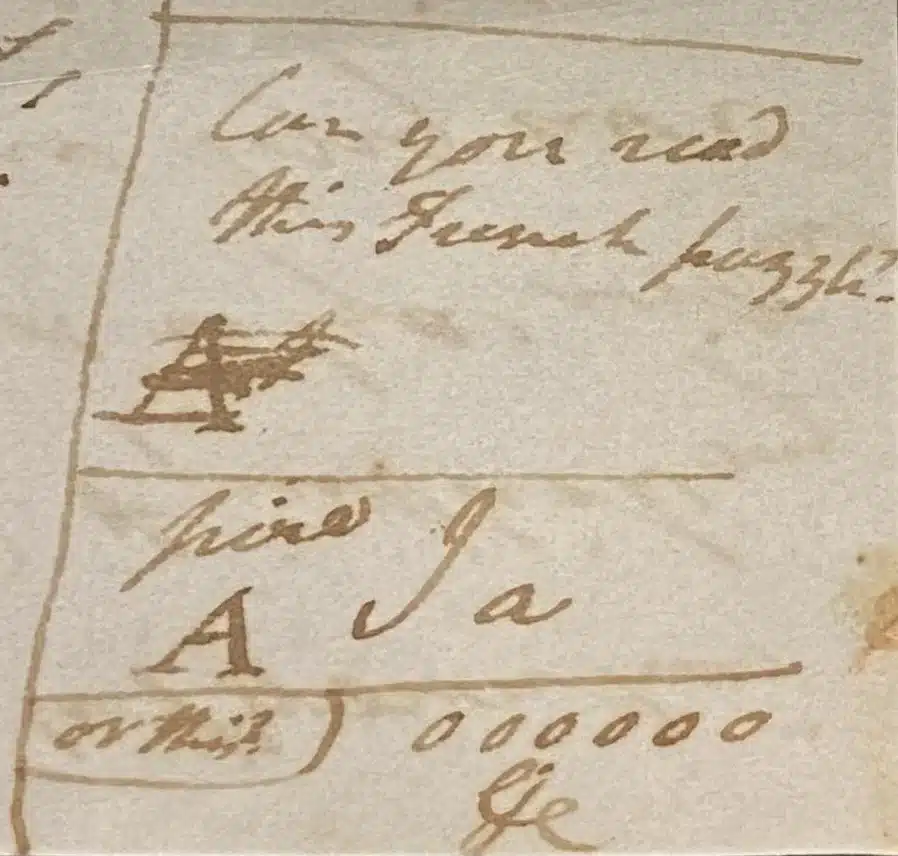
On This Day, 215 years ago, 17th October 1810, Dawson Turner wrote to Ellen. The letter includes great praise for Ellen’s latest drawings, a significant request for Ellen’s ideas on ‘the genera of the submerged algae’, an account of Sir Thomas Gage’s appreciation of Ellen, three charades and a French puzzle (see featured image above). The letter begins with a quirky ‘preface’ and the information that it is the day before his birthday.
Read the full letter HERE.
‘Tell me how to distribute the British species’
I see this as a very significant development in the relationship between these two botanists. Did Dawson Turner admit to any other of his botanist colleagues that he had such doubts about his own abilities? Did he seek help from others on this issue? So far, I have not found any evidence of him doing so. Here he places Ellen in a very different category to that of his other botanical correspondents. See the next post for how Ellen responds.
‘One of the greatest pleasures of my life’
Dawson Turner is very explicit about the value and enjoyment that he derives from the correspondence with Ellen. He still hopes that she will be able to visit him at Yarmouth.
Sir Thomas Gage
Dawson Turner quotes from a letter from Sir Thomas Gage in which he wrote ‘I have had the good fortune to make acquaintance with Miss Hutchins: her science is only equally with her liberality’. I assume that this means that they met, and this would have been at Ballylickey.
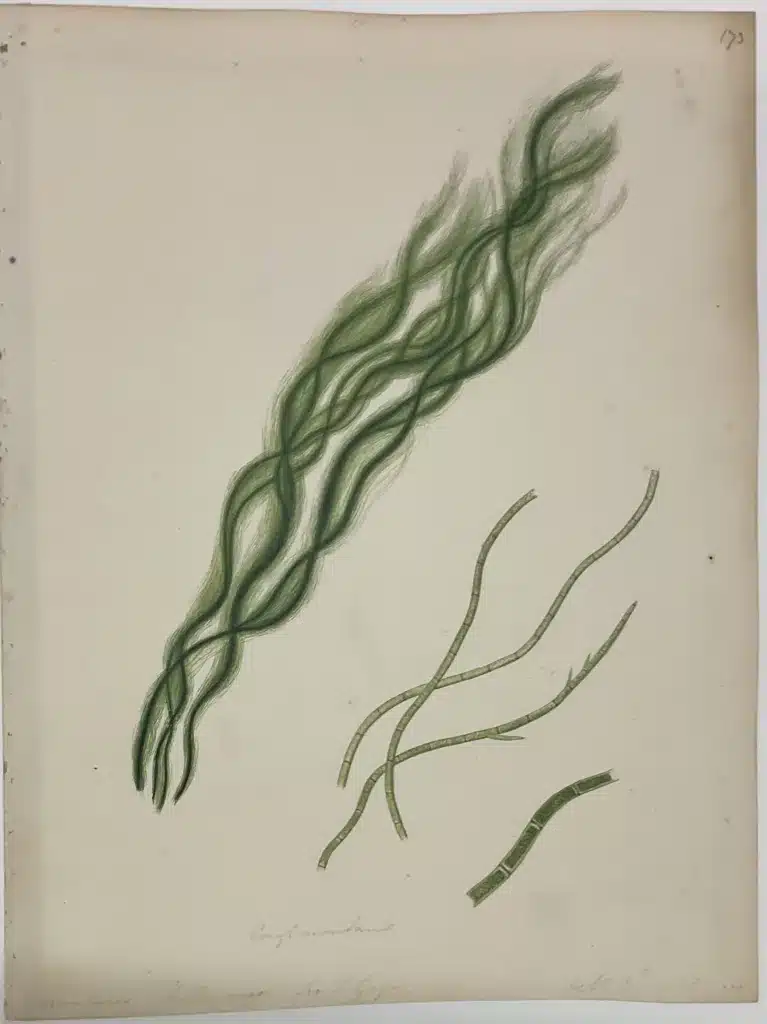
I visited the Archives at the Royal Botanic Gardens, Kew, this week, to look at the third and final box of Ellen’s drawings of British Algae (numbers 137 to 237), to see any notes or dates. I found on three of the drawings a note in her hand that reads ‘Killarney, from Sir T Gage’. The date on two of them is 1st October 1810, and on the third, it is 3rd October 1810. See below for a photograph of one of these drawings.
‘3 charades, written by a man of note’
From Wikipedia:
A charade was a form of literary riddle popularised in France in the 18th century where each syllable of the answer was described enigmatically as a separate word before the word as a whole was similarly described. The term charade was borrowed into English from French in the second half of the eighteenth century, denoting a “kind of riddle in which each syllable of a word, or a complete word or phrase, is enigmatically described or dramatically represented”.
Written forms of charade appeared in magazines and books, and on the folding fans of the Regency.
I have not managed to solve any of the three charades nor the French puzzle (photo above). I would love to hear from anyone who can do so. Please use the ‘Contact Us’ email below.
Read the full letter of 17th October 1810 HERE.
The next letter in the correspondence from 1810 is one written by Ellen to Dawson Turner on 9th November and there will be a blog post about it here on 9th November 2025.
Madeline Hutchins
Researcher on Ellen and her great-great-grandniece
17th October 2025