The Honey Season

In a letter to her brother, Sam, written exactly 212 years ago, on 10th September 1808, Ellen wrote “the honey season has commenced and you are to get some for your breakfasts.” Sam was at Trinity College Dublin studying law. Ellen was in Ballylickey, on the shores of Bantry Bay, West Cork, Ireland. She also writes that “we have had very bad weather, the corn and hay are greatly injured.” Ellen feels a strong connection to the seasons, and in the same letter writes that she finds winters miserable, whereas in summer “I can amuse myself in the garden and go out botanizing”.
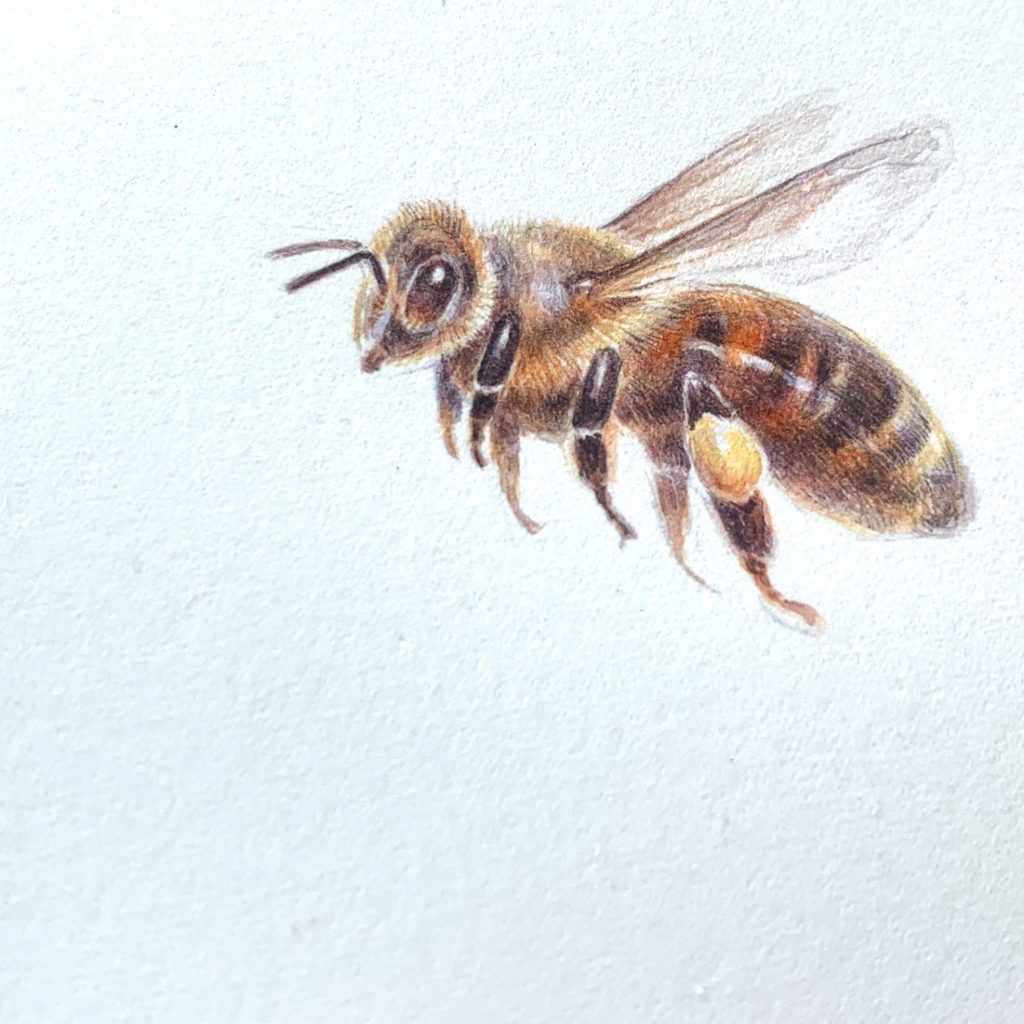
A lovely connection to the honey season is that Shevaun Doherty, the botanical artist that the Ellen Hutchins Festival works closely with, also paints bees and is passionate about pollinators. She painted bees for a series of stamps for An Post, and for the All Ireland Pollinator Plan.
Above and below are wonderful examples of her paintings of honey bees.
And there is another rather special connection. Laura McKenna, poet and writer, in a Zoom session in the virtual Ellen Hutchins Festival last month, shared some of her poems written in response to phrases in Ellen’s letters to English botanist, Dawson Turner, and his letters to her. One, called Self-Preservation, is in response to a sentence written by Dawson Turner to Ellen when she had told him how ill she had been. Laura McKenna takes up the story:
“This poem was inspired by a line from Dawson Turner’s letter to Ellen on 17th October 1813. It struck me as very moving. But in giving voice to Ellen, I thought of how often there was humour in their correspondence and so her “response” is a consideration of preservation methods of the period.”
Self-Preservation
“Preserve yourself with care, I beseech you.”
D.T. to Ellen Hutchins, 17th October 1813
How might she do it?
Pressed between sheets of blotting paper
or pinned, wingless and silent,
under glass?
She could lie among apples in a straw-lined
box or with parsnips nestled
in sawdust.
She could hide from the cold, under a cloche,
cushioned on damp moss.
So many ways.
Cured in the smokehouse, laid out
in the icehouse or soaked in a barrel
of brine.
Candied, jellied, pickled or potted, or fixed
in a gobbet of fat. But no. Not that,
not after all.
She will seal herself like a precious seed, in yellow
beeswax, bring to him scent of honey, spiced
pollen and warm cedar, a final gift.
by Laura McKenna
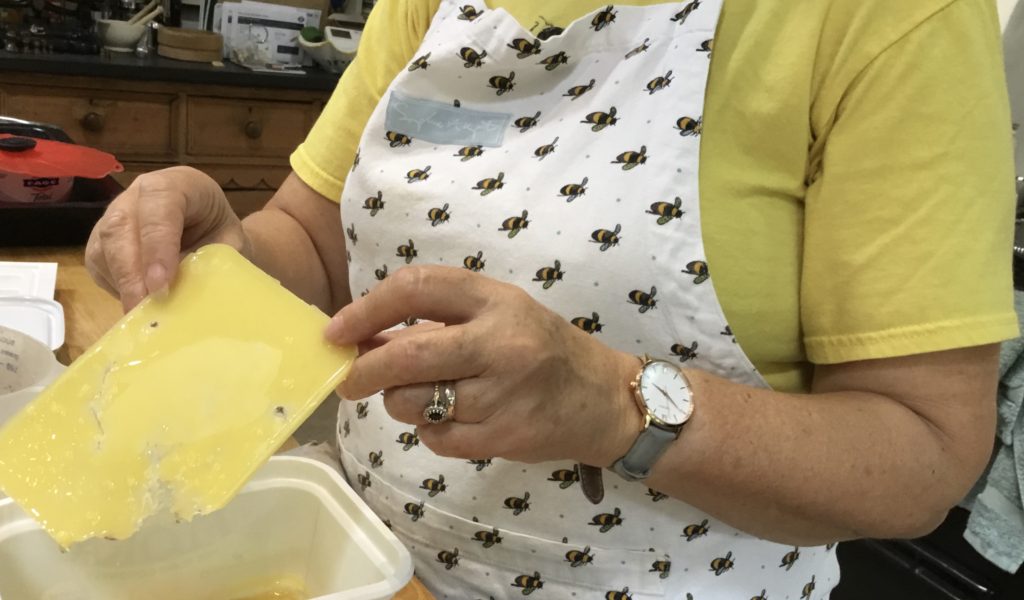
The honey season has commenced here where I live, in Surrey, just south of London. 33 jars were filled with the first honey from a hive in our garden, belonging to beekeeper friends of ours. They did the honey extraction in our kitchen. Our house was built in 1366, making me wonder how many times over the years and centuries honey will have been extracted under this roof.